
Workshop Debrief: Lessons from a Scrappy Summer Workshop
A few weeks ago, I hosted a free mini-pottery workshop at our local outdoor market.
It came about after I was awarded a small community-building grant under the premise that "small ideas are beautiful ideas."
I set up a drop-in workshop table where folks could create a tiny dish out of air-dry clay in less than 10 minutes (or longer if they were feeling super creative!).
It turned into a lovely day of connecting with neighbours I knew and meeting new faces too.
I thought it could be fun to break down the workshop planning process with you.. sharing some of the intentions behind my decisions, and then how things actually panned out on the day!

My Workshop Planning Framework
When I create workshops, I first find my starting point, as then decisions around the other important components can come more easily.
These main components are the why, what, where, who, how, and when, and in this case, the "why" was my starting point.
Why shall we gather?
The grant I was awarded supports projects that build community through neighborhood connections.
I'd originally applied with the idea of hosting a stand-alone workshop for a small group of community members, but then thought that perhaps doing something super accessible and for a wider array of folks might better suit the purpose.
Who shall we invite?
When planning workshops, I usually use what Priya Parker (who wrote my sacred text on Gatherings) refers to as "generous exclusion" to decide who gets to join.
While this workshop had a much more open door, everyone-invited sort of vibe (it was literally outside with no door), I did make some choices that linked back to the more localized purpose of the workshop.
I did this by keeping advertising very low-key, and primarily just in our local Facebook groups, as the focus was our community (though visitors were absolutely welcome).
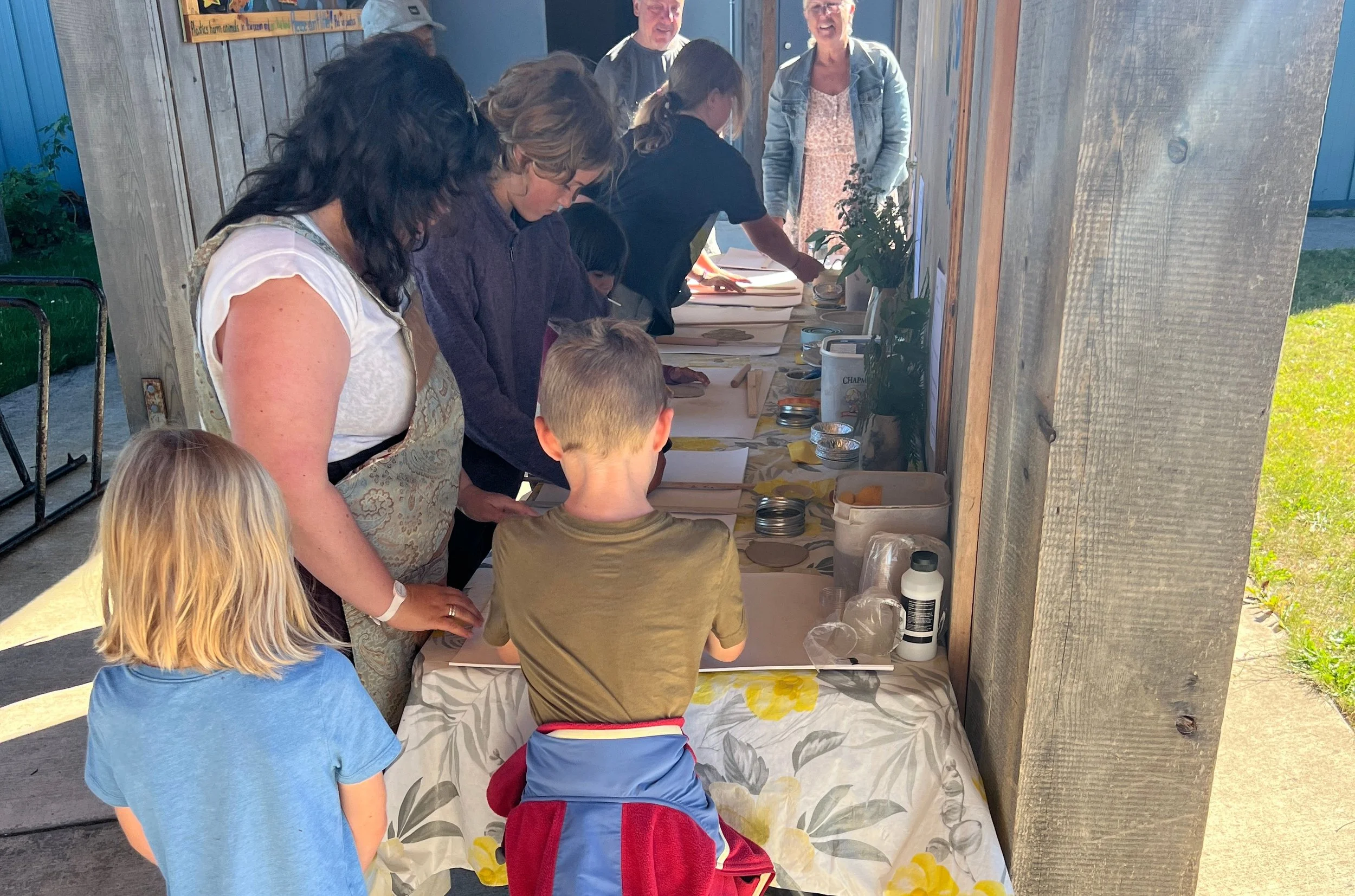
And it seemed to work, as it was busy but not chaotic, and I had a few dozen folks come through over the 2 hours.
That included kiddos as young as 3, a mix of locals and visitors, with a wide array of creative backgrounds and experience levels!
Where shall we meet?
As a regular vendor at our local market, I'd been brainstorming ways with the market manager to increase and diversify attendance, so this felt like a perfect fit to draw people out and encourage them to linger longer.
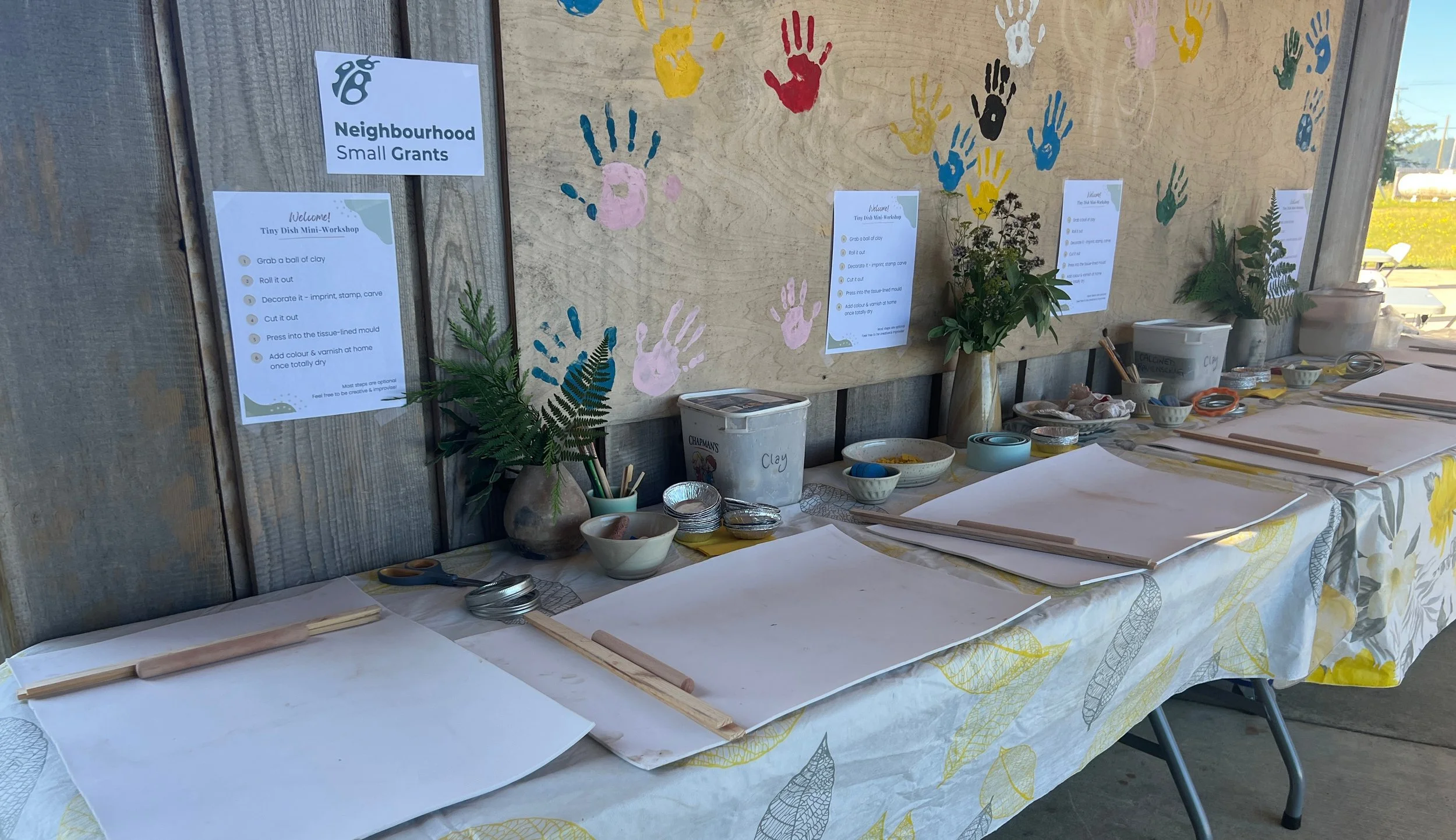
The outdoor market provided the perfect backdrop, with folding table, sunny weather (with a bit of challenging wind), mostly standing stations with a couple of chairs for accessibility.
The market's natural ambiance and food vendors meant I didn't have to worry about those elements.
What shall we make?
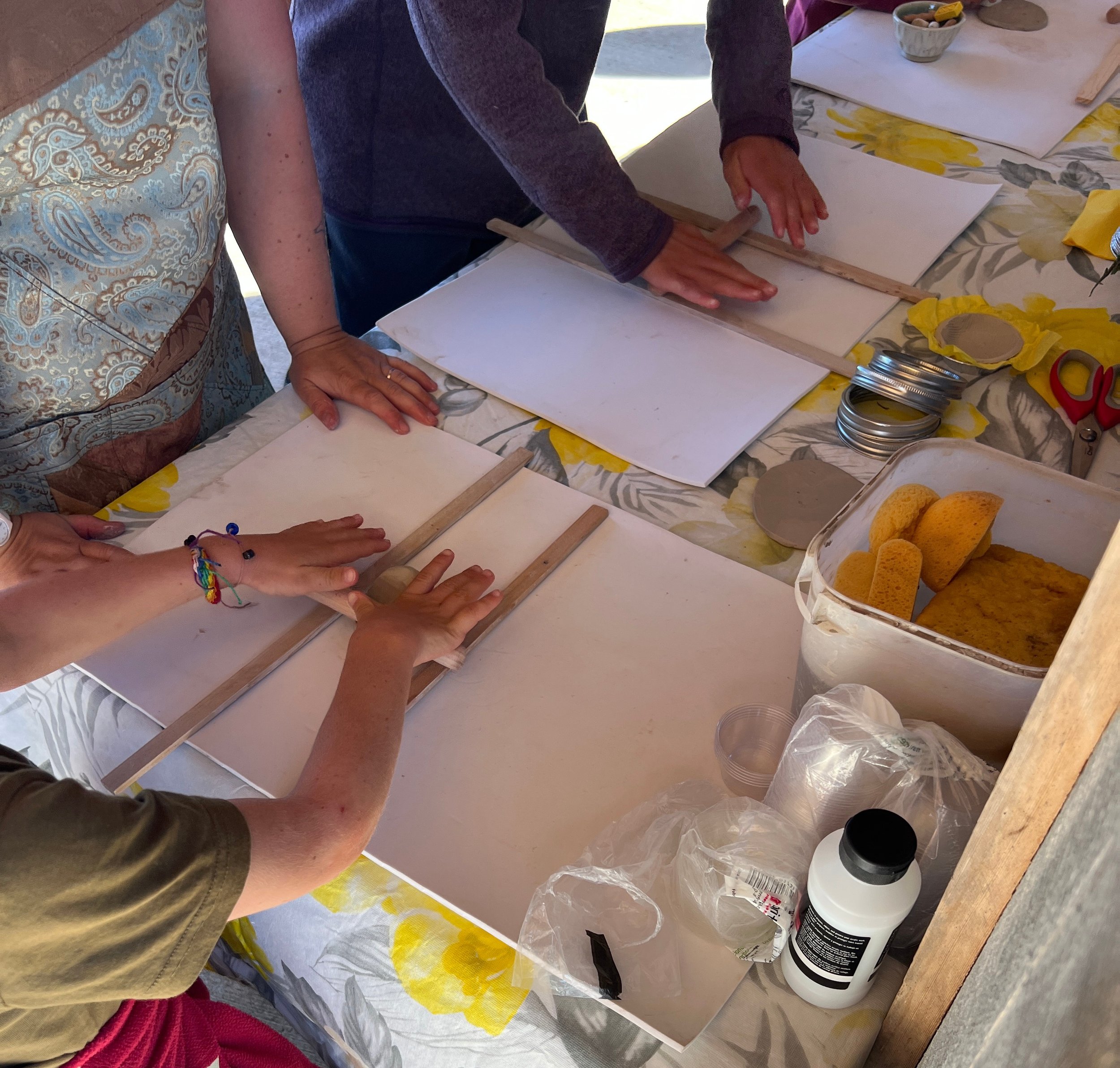
Keeping in mind the purpose, I chose a SUPER simple base project of making tiny dishes using air-dry clay.
That meant no firings were needed, and it kept stakes beautifully low.
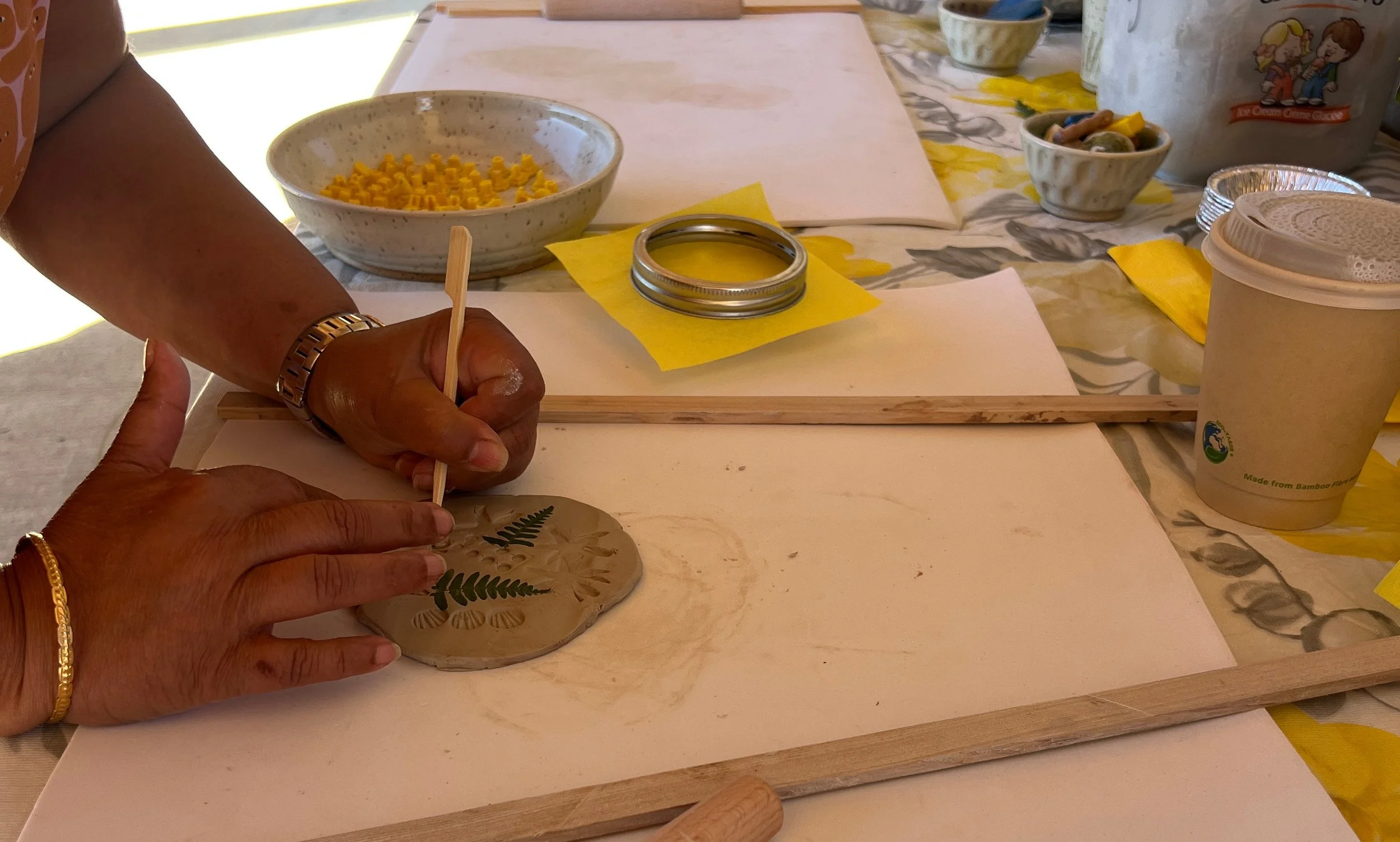
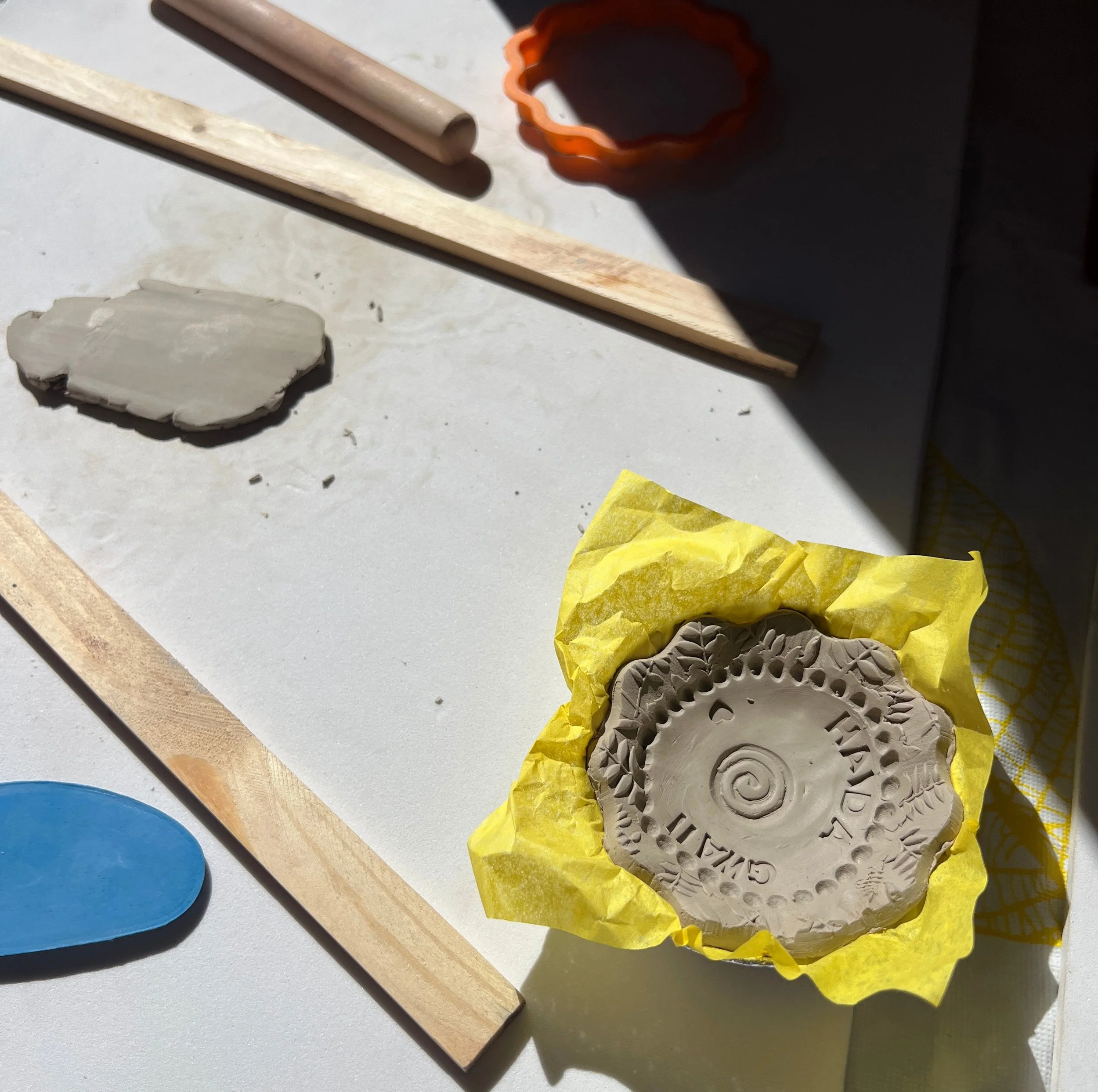
I brought lots of fun, playful ways to decorate, including letter stamps, foliage, shells, lace, Lego, and other texture-making treasures.
This gave a lot of creative freedom, which meant I saw a wonderful array of tiny dishes… from a single imprinted sage leaf, to an all-over lego-stamped pattern, to a cheeky bottom.
How shall I teach it?
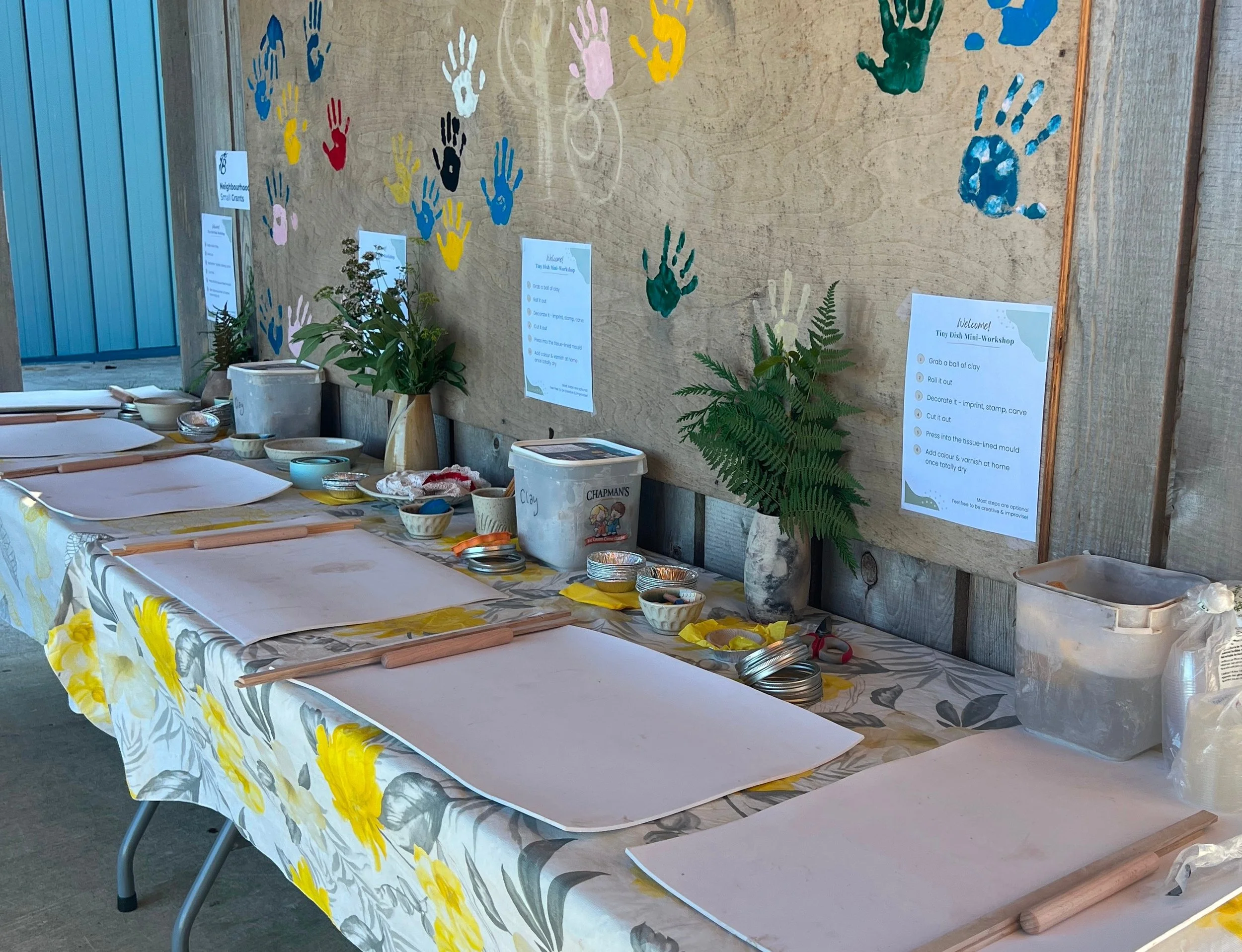
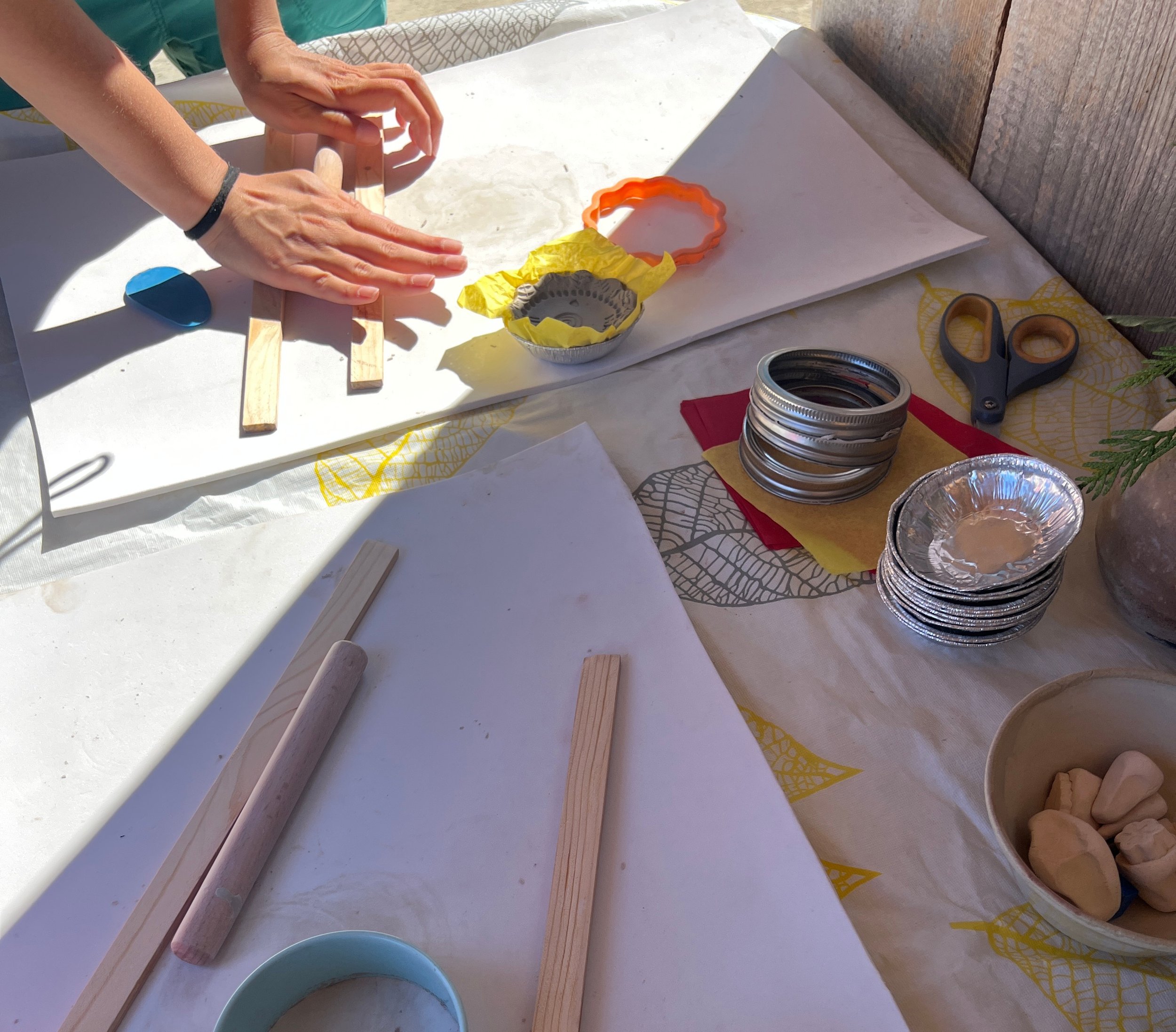
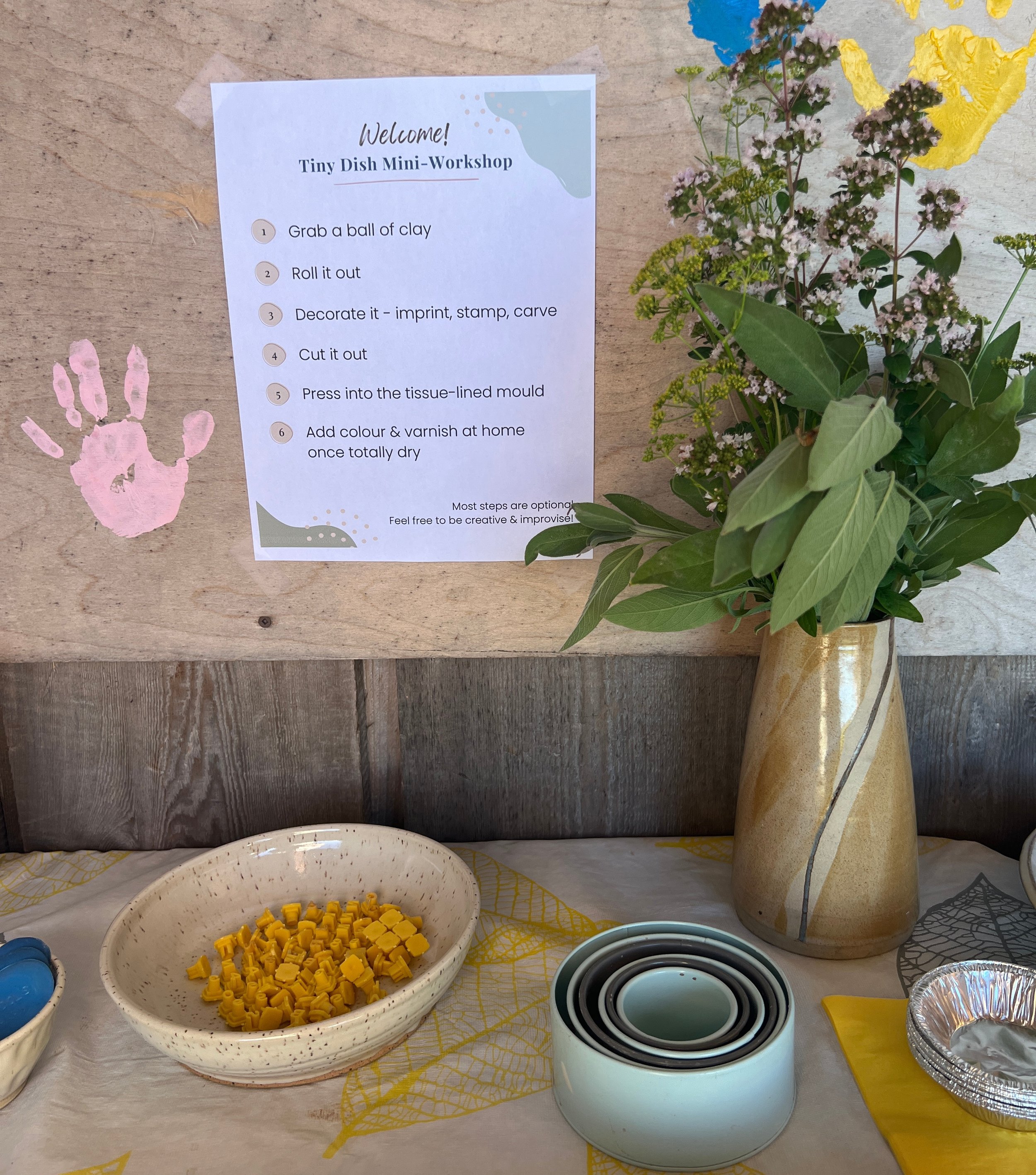
Instead of a step-by-step "follow me" demo with everyone moving at the same pace, I opted for six drop-in stations with simple printed instructions taped to the wall.
The clay was pre-portioned and in a labelled bucket, so people could grab a ball and get started even if I was helping someone else.
I'd demo steps as needed, adapting to each person's skill level.
The project was simple enough that I could bounce between stations without chaos taking over. This approach made it accessible across ages and abilities.
There's Always a Pivot
Mid-setup, I realized I'd likely have lots of kids and that my original plan to provide paint would create a cleanup nightmare (visions of everything covered in midnight blue acrylic!).
I pivoted, ditching the painting tools and instead sending everyone home with varnish and advice to paint at home using whatever they have on hand (markers, paints, nail polish even).
Reflections for Next Time
Here are a few things that came out of my post-workshop reflection walk I took the next day:
Work on my "invitation spiel" to draw people in more naturally
Mention that pieces can go outside in the garden to naturally return to clay (reaffirming that there's something beautiful about embracing impermanence in art practice). Especially for those who were travelling and worried about getting their tiny dishes home intact.
Confirm table setup details ahead of time, as I arrived not knowing where I'd be setting up or how many work stations I'd be able to squeeze in, which just made packing a bit more challenging.
So there's a bit of a peek behind the scenes of how I approach workshop planning!
It was scrappy, it was small, but it was indeed beautiful… exactly what community-building should be.
If this sparks any curiosity about hosting your own creative gatherings, do check out Wondrous Workshops, where I'll dive deeper into frameworks like this one for creating meaningful art workshops.